What The Service Covers
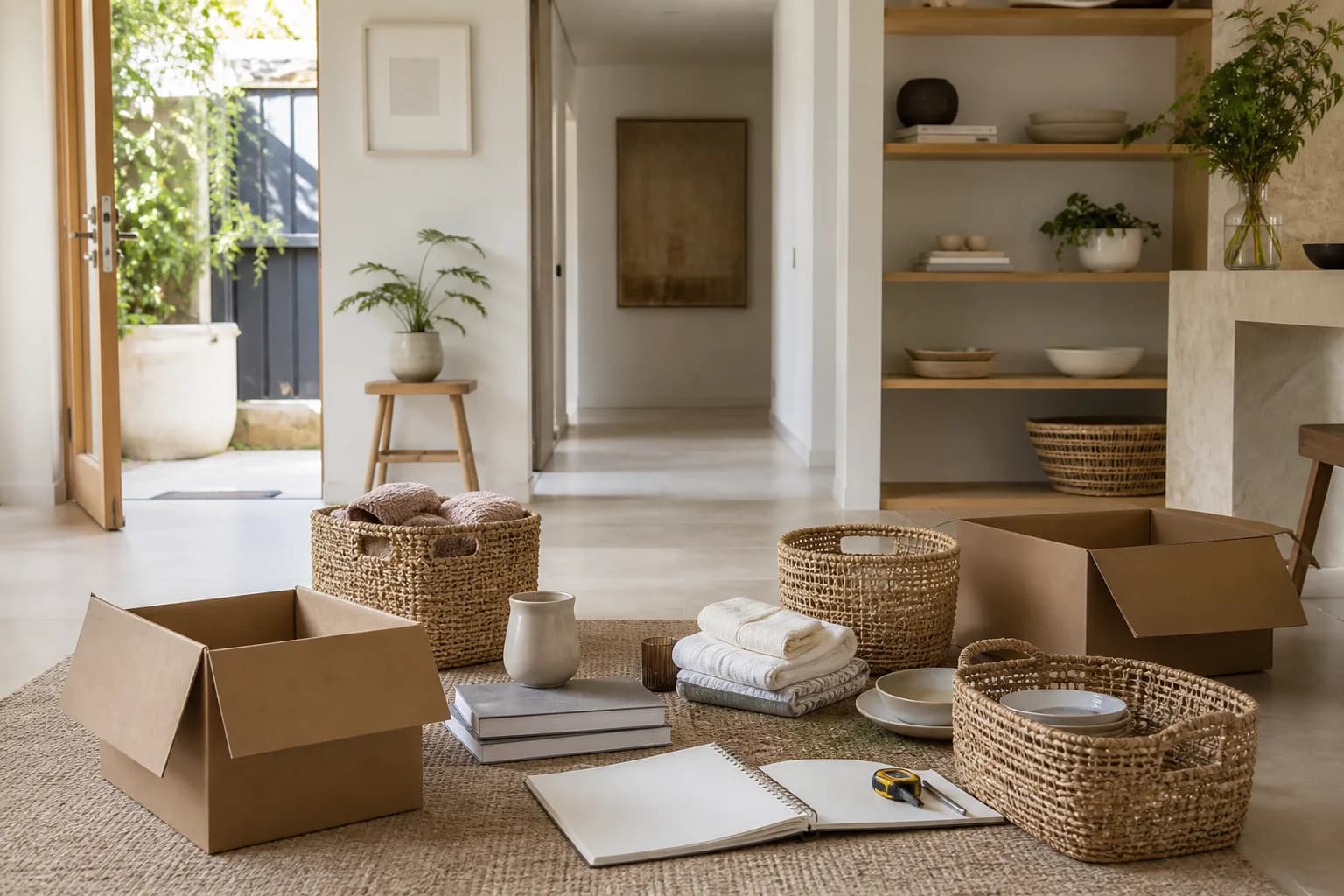
Two ends of the same job. Before the move: cutting down what gets packed, packing room by room and labelling for the new address. After it: unpacking priority rooms first, then setting up kitchens, wardrobes, bathrooms, laundries and daily storage around the new home.
We quote each move after understanding the house, the dates, the access at both ends, the volume, and how much you want covered either side of the removalist.
When A Moving Organiser Earns Their Fee
When the move involves more than transport. That may mean full cupboards, family logistics, different storage at the new address or decisions that need to happen before boxes are packed.
It helps when:
- You want to move less than you currently own
- Packing room by room is beyond the time you have
- You want labels that mean something at the other end
- The kitchen, pantry, bedrooms or bathrooms have to work immediately
- The move follows a downsize or another household change
- You want priority rooms set up as part of the unpacking scope
If the current house is holding far too much, book decluttering before packing. If the next place is smaller, downsizing is the better starting point.
What Affects The Cost
Cost follows time: how many rooms, how much is in them, and whether you want packing, unpacking or both. Packing materials and removalist fees sit outside our quote.
| Cost factor | Why it changes the number |
|---|---|
| Size of the home | More rooms, more categories, more boxes, more setup |
| Volume | Full cupboards, garage overflow and storage rooms take real time |
| Sorting before packing | Fewer things to pack means less to move and less to unpack |
| Packing materials | Boxes, paper, tape and labels may be sourced or supplied separately |
| Unpacking scope | Kitchens, pantries and wardrobes involve more detailed category and storage decisions |
| Timeline | A tight window means a more concentrated schedule |
The quote is prepared once the rooms, access, dates, volume and desired support are clear. The scope may cover unpacking, a staged packing plan or the full packing, unpacking and move-in organisation.
What Happens Before Moving Day
The pre-move work is about volume and about making each box useful at the other end.
1. We work back from the dates
Moving dates, settlement, removalist timing, priority rooms and any access problems: stairs, lifts, parking, a driveway that fits one car.
2. We cut down what moves
Sorting before packing reduces what needs to be boxed, moved and unpacked. Things get grouped into keep, donate, recycle, dispose or set aside to revisit.
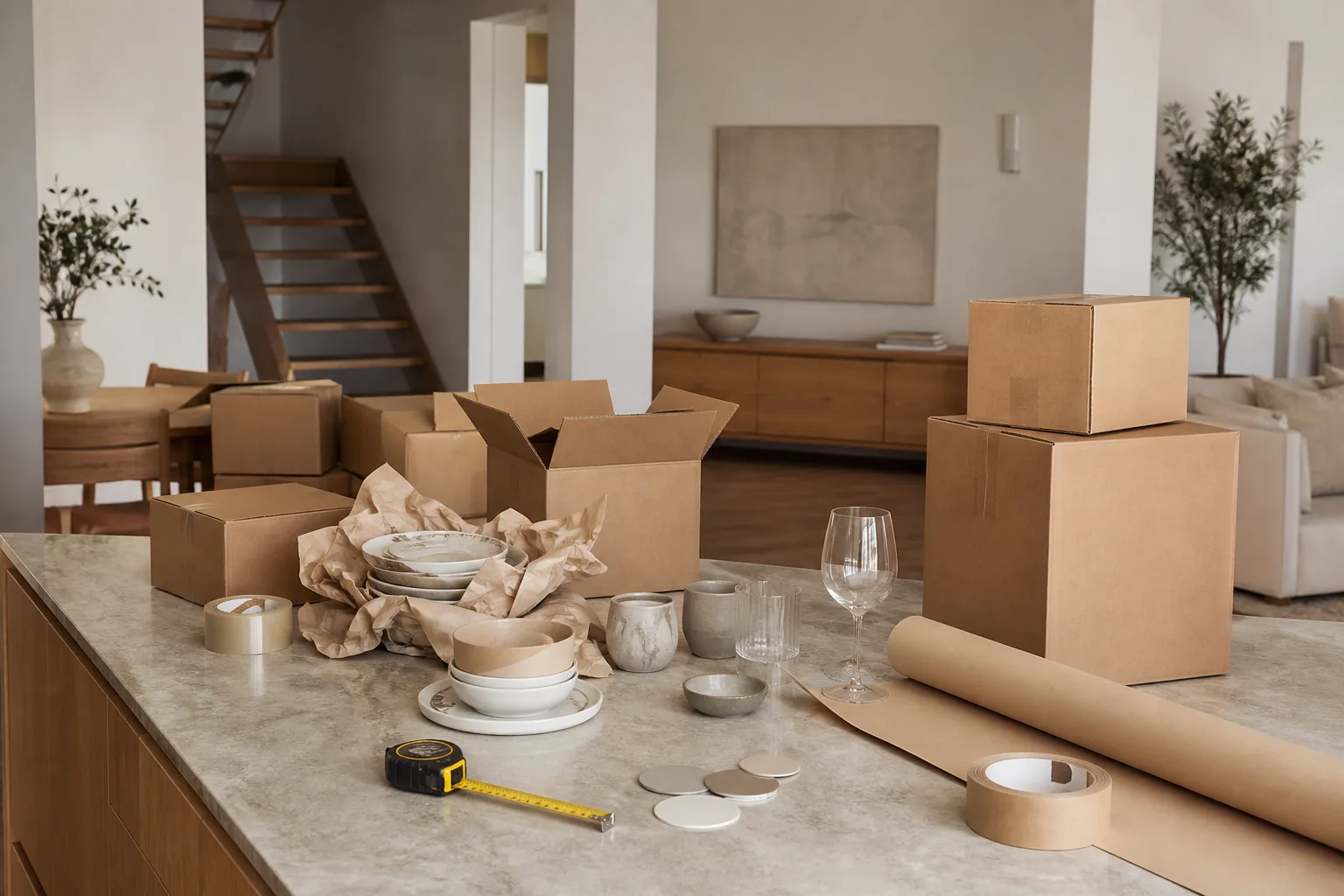
3. We pack by room and category
Daily-use items stay separate from long-term storage. Fragile items, pantry goods, bathroom products, paperwork and children's things each get treated as their own category.
4. We label for the new house
A useful label names the destination room, the main category and how urgently it needs opening. A label that says only "misc" gives nobody a useful instruction at the new address.
What Happens After Moving Day
Unpacking is not only emptying boxes. It includes grouping what comes out and assigning it to the new storage.
We work in this order:
- Kitchen and pantry
- Main bedroom and wardrobes
- Bathrooms and linen
- Children's rooms
- Laundry
- Home office and paperwork
- Storage cupboards and garage
Things get grouped, given a proper home rather than a temporary one, and the storage is set up as it fills. If the new place needs containers, dividers, baskets or labels, we recommend or source them with your approval.
What Is Included And Excluded
We do the organisation around the move. We are not a removalist and we do not lift the heavy things.
| Interiorfy Me scope | Separate service or confirmed in the quote |
|---|---|
| Sorting before packing | Removalist transport |
| Room-by-room packing | Heavy furniture lifting |
| Labelling and priority planning | Storage unit hire |
| Unpacking and new-home setup | Utility connections |
| Pantry, wardrobe and cupboard organisation | Trades and repairs |
| Storage product recommendations | Packing materials unless quoted |
When To Book
As early as you can once the window is known. How much lead time you need depends on the house, how much sorting is involved, which rooms are being packed and what has to work first at the other end.
For a move with limited lead time, ask what availability allows and identify the rooms that need to be usable first.
A Timeline That Works
The dates are decided by settlement, leases and removalist availability. The organisation is easier when the decisions are staged rather than stacked into the final weekend.
| When | What to focus on |
|---|---|
| Early planning | Sort the obvious excess, decide what is not moving, lock in dates |
| Early packing | Low-use items, seasonal things, decor, storage areas |
| Main packing | Most categories, with daily-use items kept out |
| Day before | First-night box, documents, medication, chargers |
| Moving day | Keep priority boxes visible, direct boxes to the right rooms |
| First-use setup | Kitchen basics, beds, bathroom, pantry, everyday clothes |
If the move is already close, do less but do it properly. A small amount of organised packing beats rushing everything.
A Move-In Checklist
Early Planning
- Walk each room and decide what is not moving
- Book the removalist and confirm access, parking, stairs, lifts and timing
- Sort donations, recycling, disposal and anything going back to family
- Measure the new kitchen, wardrobes, pantry shelves, linen storage and garage
- Photograph the current layouts and storage before packing starts
- Start on low-use items, seasonal things, decor and spare linen
- Keep passports, legal papers, medical documents and valuables somewhere marked and safe
The Week Before
- Pack room by room, not cupboard by random cupboard
- Label every box with room, category and priority
- Keep everyday clothes, toiletries, medication, chargers and work things out
- Use small boxes for books, pantry goods and anything heavy
- Check expiry dates in the pantry, bathroom and laundry before packing
- Bag and label cords, remotes, hardware and assembly parts
- Decide which boxes get opened first
Moving Day
- Keep the first-night box, documents and valuables with you
- Ask for boxes to be placed in the right rooms as they come off the truck
- Keep the kitchen, bathroom, bedding and school boxes visible
- Do not open everything at once. Start with the rooms you need tonight
- Photograph any damage before unpacking
The First Week
- Beds, towels, toiletries and basic clothing first
- A working kitchen zone: breakfast, coffee, lunchboxes, one simple meal
- Unpack the pantry basics before buying more groceries
- One basket or drop zone for things still needing a decision
- Get empty boxes out of the house as you go
- Leave decorative styling until the cupboards work
The First Month
- Only buy storage products once you know where things naturally land
- Adjust the pantry, wardrobe, bathroom and laundry as the household uses them
- Review anything packed "just in case" that still has no clear place
- Set up a small routine for paperwork, school things, laundry and the entry
- Book help if the garage or spare room has become the holding zone
Measure Before You Buy Anything
Storage products only work when they match the belongings, the cupboard and the household. Measure:
- Shelf width, depth and height
- Drawer internal dimensions
- Pantry shelf spacing, including the awkward corner
- Wardrobe hanging height, shoe space and folded clothing space
- Laundry cupboard height for bottles and backup supplies
- Garage wall width if shelving is being considered
We can recommend options once the unpacking plan is clear. Measuring first reduces the risk of containers obstructing or wasting shelf space.
First Night, First Week
The first-night box holds what you do not want buried: bedding, towels, toiletries, medication, chargers, basic kitchen things, snacks, work or school essentials, pet supplies and important documents.
The first week is about the rooms that make a household function. Kitchen, pantry, bathroom, bedrooms, laundry, paperwork. Styling and long-term storage can wait.
Related Services
- Packing, unpacking and move-in organisation
- Home decluttering
- Whole-home organisation
- Wardrobe organisation
- Pantry organisation
FAQs
Can You Pack The Whole House?
Yes, where the scope and timing allow. We confirm the rooms, volume, materials and schedule before quoting.
Can You Just Unpack?
Yes. The scope can cover unpacking only, with the agreed priority rooms followed by the cupboards, drawers and storage included in the brief.
Should I Buy Boxes First?
Better to settle the scope, then decide what boxes, paper, tape and labels you actually need. Materials get discussed as part of the quote.
Should I Declutter Before Packing?
If excess belongings are part of the problem, yes. Sorting first means fewer boxes and fewer decisions at the new address.
Can You Help With A Last-Minute Move?
Where availability allows, the scope may focus on packing, unpacking or the rooms used every day. Ask once the move date and priorities are known.
Call 0420 566 181 or use the contact form to talk about your move.

Interiorfy Me
Mary and Hajer, home organisers
Mary and Hajer organise, declutter and style homes across Sydney. These guides explain the scope, process and practical questions behind that work.
Ask for a quote