What Pantry Organisation Costs In Sydney
The quote follows the size of the pantry, how much food is in it, what products are needed and how much setting up is involved. A cupboard pantry takes less time than a walk-in, but the process is the same either way: empty it, check it, group it, measure, contain, label, hand it over.
We quote once the shelf measurements, food volume and household routines are clear. Those details can matter as much as the pantry's overall size.
What The Job Really Is
Not making shelves look neat. The test of a pantry is whether you can put a grocery shop away without rearranging anything, and whether you can tell from the doorway that you are out of pasta.
We can help with:
- Checking dates and consolidating duplicate open packets
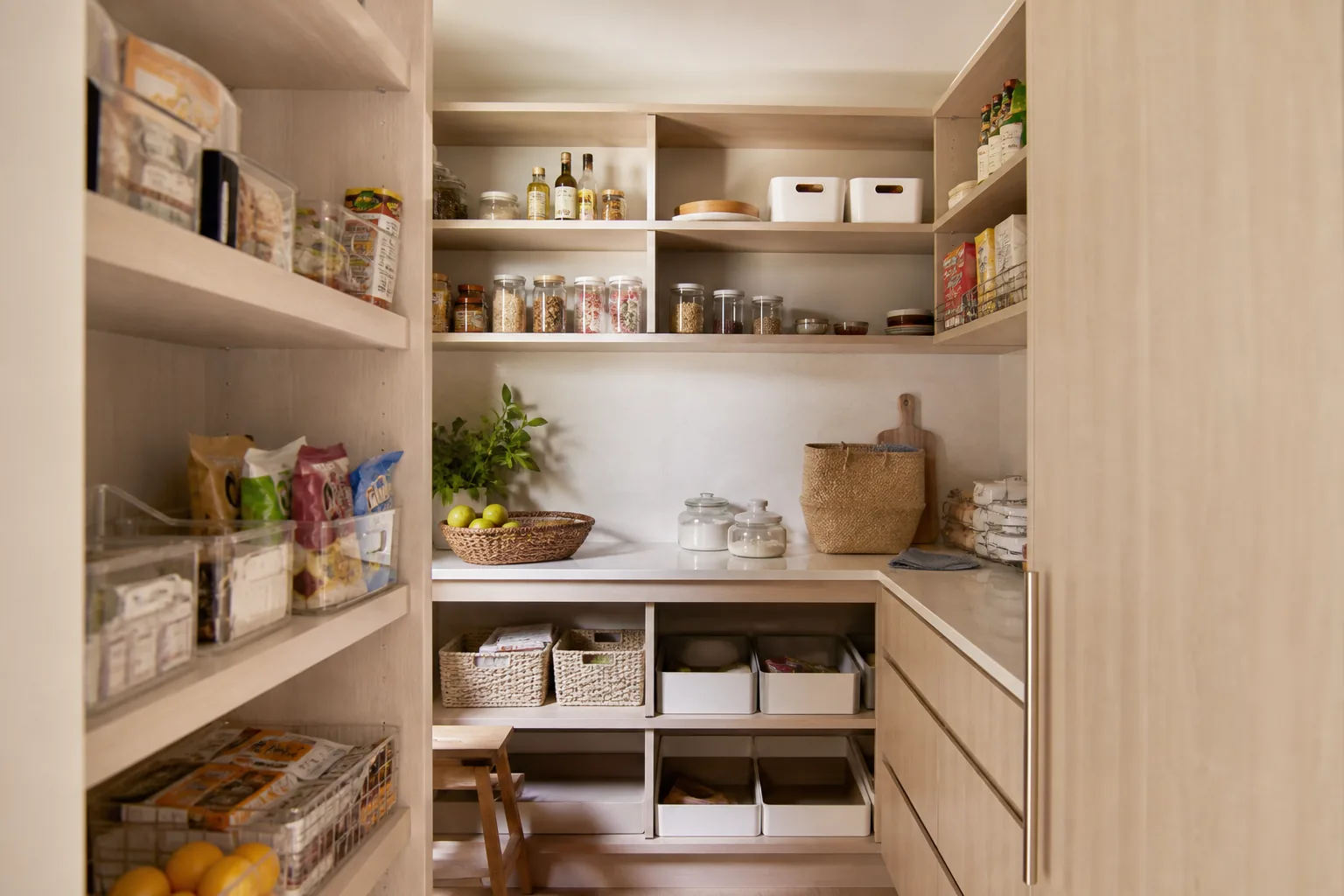
- Grouping by category: snacks, baking, dinner staples, oils, spices
- Zoning shelves, drawers and cupboards
- Planning containers and sourcing them
- Labelling
- Turntables, risers and baskets where the space takes them
- Explaining the system so the household knows how to reset it
If the wider kitchen needs work too, combine this with kitchen organisation.
What Affects The Cost
Time first, products second. More shelves, more categories and more decanting means more planning and more setup.
| Cost factor | Why it changes the number |
|---|---|
| Pantry size | Walk-ins and butler's pantries take longer than a cupboard |
| Food volume | More items means more checking, grouping and restocking |
| Existing products | Reusing good containers cuts the product spend |
| Decanting | Transferring dry goods into containers takes real time |
| Labelling | Consistent labels need planning and placement |
| Household routines | Bulk buying, big families and specific diets need clearer zones |
There is broader pricing context in the home organisation cost guide.
Which Products Are Actually Worth It
After measuring and grouping, not before. Buying containers first risks choosing a set that is too tall or too deep for the shelves.
What tends to earn its place:
- Airtight containers for the dry goods you buy most often
- Baskets for packets and snacks that do not stack well
- Turntables for oils, sauces and spreads
- Risers for tins and jars
- Drawer dividers for tea, spices or lunchbox things
- Clear bins for back stock
- Labels on containers, shelves and zones
We can recommend and source products or work entirely with what you own. The pantry plan should fit how the household shops, cooks and puts groceries away.
Small Pantry Or Walk-In?
The same product list will not suit both.
| Pantry type | What to focus on |
|---|---|
| Cupboard pantry | Clear categories, risers, stackables, door storage if it fits |
| Small apartment pantry | Fewer products, visible tubs, a simple weekly reset |
| Walk-in | Bulk zones, back stock, appliance storage, labelled shelves |
| Butler's pantry | Serving pieces, appliances, overflow food, entertaining things |
| Family pantry | Lunchbox zone, snack access, back stock, labels children can read |
A small pantry needs restraint because every product takes shelf space. A large pantry needs clear limits around bulk stock and back stock so those categories do not spread across unrelated shelves.
What Happens In A Session
1. Everything comes out
The whole pantry gets emptied so it can be seen properly. Expired items, duplicates and food nobody is using become obvious very quickly.
2. We group by use
Breakfast, snacks, baking, dinner staples, spices, oils, tins, lunchbox things. Categories that match how you cook, not how the packaging is shaped.
3. We measure before deciding on products
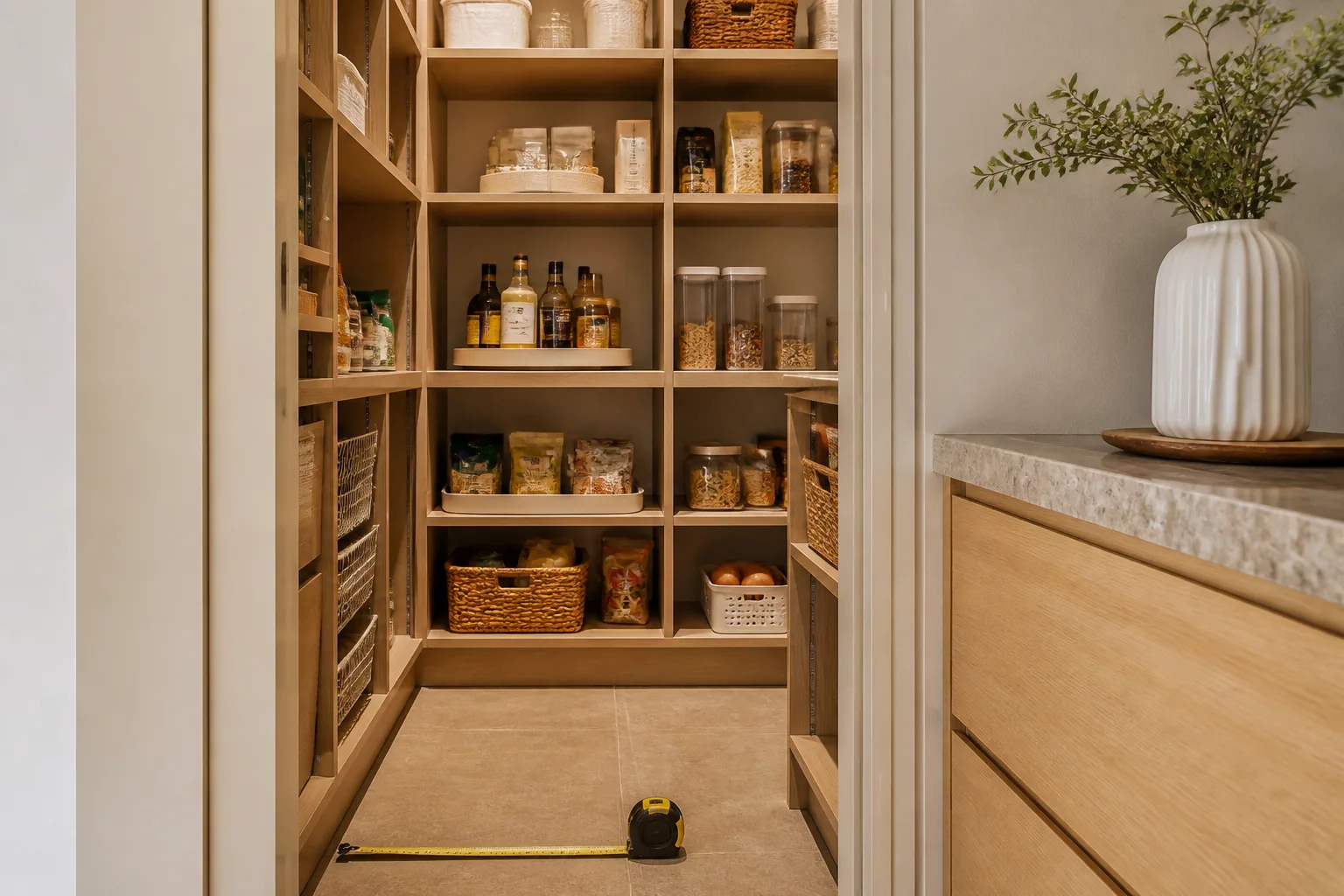
Shelf height, depth, the awkward corner, door clearance. Containers only work when they fit the actual space.
4. We set the zones
Daily things at the easiest height. Back stock, occasional baking gear and entertaining supplies go higher or deeper.
5. We label and hand it over
Labels show where things belong. At handover, we explain the zones and the intended restocking order.
What Is Included And Excluded
| Included | Confirmed separately in the quote |
|---|---|
| Pantry review and category planning | Grocery shopping |
| Date checks and consolidating duplicates | Food disposal beyond the agreed scope |
| Container and product recommendations | Product purchases unless approved |
| Setting up shelves, baskets and containers | Cabinetry or renovation |
| Labelling and handover | Appliance repair or cleaning |
We work with cupboard pantries, walk-ins, butler's pantries, appliance cupboards and any dry goods storage attached to the kitchen.
When To Book
When food is expiring unseen, unpacking the shopping is difficult, the shelves are crowded or the pantry quickly returns to disorder. It can also be useful after a move or when household routines have changed.
Related Services
FAQs
Do I Need All New Containers?
No. Anything that fits and works gets reused. New products are recommended only where they improve visibility, access or how easy the system is to keep.
Is It Worth It For A Small Cupboard?
Yes. When every shelf matters, clear categories and measured products can make the available space easier to use.
Do You Throw Out Expired Food?
We identify it and talk it through with you. Nothing goes without your say-so.
Do Labels Really Help?
They can. Labels show where categories belong and reduce the need to remember the layout when groceries are being put away.
Can You Do The Fridge Too?
Yes, where it fits the scope. It works well when the pantry and kitchen are being reset at the same time.
Call 0420 566 181 or use the contact form to talk about your pantry.

Interiorfy Me
Mary and Hajer, home organisers
Mary and Hajer organise, declutter and style homes across Sydney. These guides explain the scope, process and practical questions behind that work.
Ask for a quote